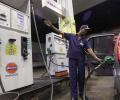
Petrol and diesel prices are likely to be hiked this week as oil companies prepare to pare losses accumulated from keeping rates steady for over four months in the run-up to assembly elections in five states, including UP, despite international oil prices jumping to a 13-year high of $140 per barrel. West Texas Intermediate crude futures, the US oil benchmark, rose to $130.50 per barrel on Sunday evening, its highest since July 2008, before retreating. The international benchmark, Brent crude, hit a high of $139.13 at one point overnight, also its highest since July 2008.

The Trinamool Congress has launched a sharp attack on the Narendra Modi government over rising fuel prices, economic concerns, and exam irregularities, accusing the Centre of betraying citizens.

The Indian government has increased the export duty, or windfall tax, on diesel to Rs 55.5 per litre and on aviation fuel (ATF) to Rs 42 a litre, effective immediately, to boost domestic availability and prevent exporters from exploiting global price differences.

Indian oil marketing companies are incurring significant losses, selling petrol at a Rs 14 per litre loss and diesel at Rs 18 per litre, as elevated global crude oil prices, exacerbated by the West Asia crisis, outpace capped retail fuel rates, according to rating agency Icra.
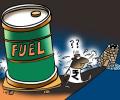
Senior Trinamool Congress leader Abhishek Banerjee has accused the BJP-led central government of planning to increase fuel prices after the West Bengal assembly elections. He challenged the BJP to promise no price hikes for LPG, petrol, and diesel over the next five years.
India's retail inflation rose to 4.38 per cent in June, driven primarily by costlier food items, pushing it above the Reserve Bank of India's median target of 4 per cent for the first time under the new series.
The AIMTC, which had gone on strikes to protest diesel price hikes in the past, said it will hold a meeting of its national members on July 12 to chalk out its future course of action.

Jet fuel (ATF) price on Wednesday was hiked by 4 per cent in line with firming international oil prices but petrol and diesel rates remained on freeze for a record 10th month in running. Aviation turbine fuel (ATF) price was increased by Rs 4,218 per kilolitre, or 3.9 per cent, to Rs 1,12,356.77 per kl in the national capital, according to a price notification of state-owned fuel retailers. The increase follows three rounds of reduction since November.

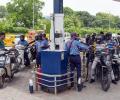
Petrol price on Monday was hiked by 30 paise a litre and diesel by 35 paise, taking the total increase in rates in the last one week to Rs 4-4.10 per litre. Petrol in Delhi will now cost Rs 99.41 per litre as against Rs 99.11 previously while diesel rates have gone up from Rs 90.42 per litre to Rs 90.77, according to a price notification of state fuel retailers. Rates have been increased across the country and vary from state to state depending upon the incidence of local taxation.

Union Finance Minister Nirmala Sitharaman has warned that the ongoing West Asia crisis is not merely a geopolitical issue but will directly lead to higher fuel costs for common people and businesses, impacting shipping, input availability, and export orders.

'PM Modi is trying to reduce the volume of fuel consumed instead of raising prices sharply.'
Petrol price on Sunday was hiked by 50 paise a litre and diesel by 55 paise, taking the total increase in rates since resumption of daily price revision less than a week back to Rs 3.70-3.75 per litre. Petrol in Delhi will now cost Rs 99.11 per litre as against Rs 98.61 previously while diesel rates have gone up from Rs 89.87 per litre to Rs 90.42, according to a price notification of state fuel retailers. Rates have been increased across the country and vary from state to state depending upon the incidence of local taxation.

Petrol is currently sold at a loss of Rs 6.68 per litre and diesel at Rs 5.81 per litre. Naik said the Vajpayee government had given Navratna oil firms the freedom to decide fuel prices.
India's move to raise the price of subsidised diesel should help with its plans to sell shares in state companies, including Oil India Ltd, to help bridge the government's fiscal deficit and gives a boost to private oil refiners looking to enter the market for bulk diesel sales.

It was trouble from the word go in Lok Sabha and Rajya Sabha which saw Opposition members on their feet demanding rollback of the petrol and diesel price hike that resulted from Finance Minister Pranab Mukherjee's Budget proposals.
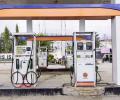
The Indian government has imposed a new windfall gains tax of Rs 3 per litre on petrol exports, while simultaneously reducing the levy on diesel to Rs 16.5 per litre and aviation turbine fuel (ATF) to Rs 16 per litre, effective May 16.
There is no proposal on the anvil for an increase in prices of diesel, Reddy told reporters after taking charge of the new ministry.
The recent petrol and diesel price hike by the government did not go down well with the common people who expressed their\ndispleasure over this pre-Budget move. The prices were raised by as much as 10 per cent on Wednesday.
Amid the crisis in Libya, increase in fuel prices would become 'inevitable' if crude oil remains at $100 per barrel, Prime Minister's Economic Advisory Council chairman C Rangarajan said on Monday.

In 16 days, petrol price has been hiked by Rs 8.3 per litre and diesel by Rs 9.46 - a record increase in rates of the fuel in any fortnight since pricing was deregulated in April 2002.

The price of jet fuel (ATF) was sharply increased by 7.5 per cent on Tuesday, while the cost of LPG used in commercial establishments was reduced by Rs 58.50 per cylinder, reflecting shifts in international benchmark rates. After three rounds of price cuts, aviation turbine fuel (ATF) price was increased by Rs 6,271.5 per kilolitre, or 7.5 per cent, to Rs 89,344.05 per kl in the national capital - home to one of the busiest airports in the country, according to state-owned fuel retailers.

Diesel is currently sold at a loss of over Rs 10.80 per litre.
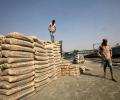
Indian cement manufacturers, despite a stable Q4FY26, are bracing for significant profitability pressures from Q1FY27 onwards due to escalating input costs, primarily driven by the West Asia conflict's impact on coal and petcoke prices.
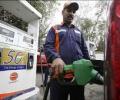
With vast disparity in fuel prices, the demand for diesel cars had reached upto 85 per cent and petrol cars had come down to 15 per cent, which otherwise usually remained at 50:50 per cent levels in India.
The oil companies will meet on Friday for the review meeting on pricing in which petrol price could be increased by Re 1 and diesel prices by 50 paise by this weekend.
"Petroleum Ministry has moved a Cabinet note for raising fuel prices but a decision will depend on what allies of the ruling alliance say," an official said.
petroleum minister has announced that fuel prices would not be hiked and talks with allies on the issue were on.

Aviation Turbine Fuel (ATF) prices have more than doubled to a record high, impacting airlines and consumers, while commercial LPG rates also see a significant increase.

With global crude oil prices climbing to their highest level in two-and-a-half years, Oil Minister S Jaipal Reddy on Friday said a ministerial panel will take a call on raising petrol and diesel prices.

Tata Motors' MD and CEO, Girish Wagh, has identified rising diesel prices as the most significant threat to India's commercial vehicle (CV) industry recovery, despite the sector recently surpassing its pre-FY19 wholesale peak. Diesel costs account for 25-50% of a truck operator's total cost of ownership, making any increase a critical concern for fleet economics.
Diesel prices should be immediately hiked by Rs 4-5 per litre, the Kirit Parikh Committee has recommended while favouring continuation of existing pricing principles for controlled petroleum products.
With the government giving limited freedom to state-run oil companies to fix auto fuel prices within a narrow price band, petrol prices are set to go up by Rs 0.57 per litre and diesel by Rs 0.92 per litre from August 1.
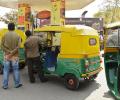
CNG price in the national capital on Friday was hiked by 80 paise per kg, while piped cooking gas rates were increased by a steep Rs 5 per cubic metre on the back of the government raising input natural gas prices to record levels. CNG price in the National Capital Territory (NCT) of Delhi has been increased to Rs 60.81 per kg from Rs 60.01, according to information posted on the website of Indraprastha Gas Ltd (IGL) -- the firm which retails CNG and piped cooking gas in the national capital. This is the sixth increase in CNG prices in the last month.

Narendra Modi's landslide victory gives him the mandate to deregulate diesel prices as well as raise natural gas rates with a clear road map towards free pricing to cut subsidies and shrink the budget deficit.

Companies are already diversifying sourcing, raising prices, and reworking operating models as the disruption drags on.

Petrol and diesel prices on Friday rallied to their highest ever levels across the country, as fuel rates were hiked again by 35 paise a litre. The price of petrol in Delhi rose to its highest-ever level of Rs 105.14 a litre and Rs 111.09 per litre in Mumbai, according to a price notification of state-owned fuel retailers. In Mumbai, diesel now comes for Rs 101.78 a litre; while in Delhi, it costs Rs 93.87.
The price of diesel sold to bulk users has been hiked by about Rs 25 per litre in line with a near 40 per cent rise in international oil prices, but retail rates at petrol pumps remain unchanged, sources said. Petrol pump sales have jumped by a fifth this month after bulk users like bus fleet operators and malls queued up at petrol bunks to buy fuel rather than the usual practice of ordering directly from oil companies, widening the losses of retailers. Worst hit are private retailers like Nayara Energy, Jio-bp and Shell, who have so far refused to curtail any volume despite a surge in sales.
In August, passenger car sales dropped 18 per cent to 118,142 units, the sharpest decline in nearly 10 months, due to weak consumer sentiment and a month's lockout at Maruti Suzuki. Sales of diesel-driven utility vehicles grew 70 per #162 this is likely to be affected by the price rise.
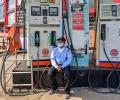
Petrol and diesel prices across the country soared to all-time high levels on Thursday as rates were hiked again in line with the spurt in international oil prices. Petrol price was increased by 30 paise per litre and diesel by 35 paise a litre, according to a price notification of state-owned fuel retailers. The price of petrol in Delhi rose to its highest-ever level of Rs 103.24 a litre and to Rs 109.25 per litre in Mumbai, the notification showed.
